+44 1753 439 289 michelle@greatbritishtalent.com


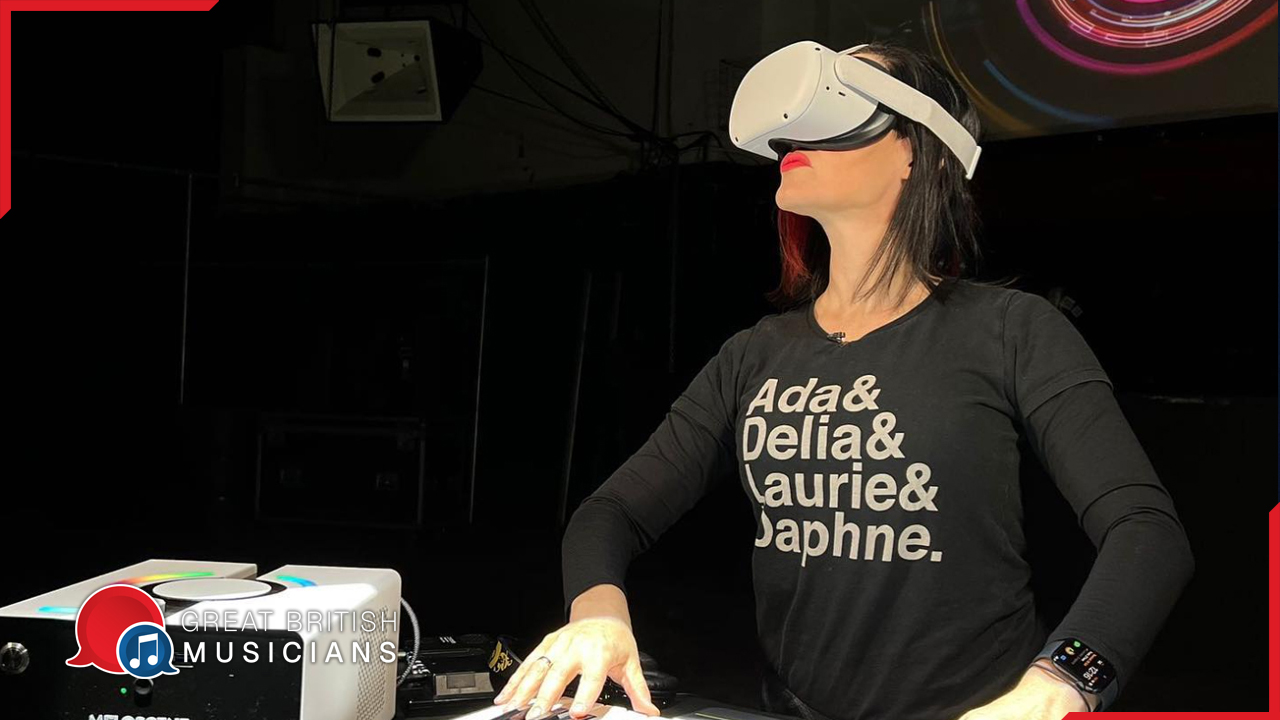

The use of AI in music has already changed the industry. From song-writing and production to streaming, rights and music education, this new tech is becoming part of everyday life for musicians and audiences alike.
Across the globe, artists are using Artificial Intelligence to develop ideas, experiment with sounds, restore recordings and speed up technical production. At the same time, AI-generated music is appearing on streaming platforms in increasing quantities, creating new opportunities alongside difficult questions about copyright, consent and authenticity.
The key question is no longer whether AI will affect music. It is how musicians and the music industry choose to use it.
A New Musical Tool
Artificial Intelligence can now assist with almost every stage of music creation, from generating musical ideas and lyrics to separating stems, improving recordings, experimenting with arrangements and suggesting production changes.
For many musicians, its greatest value is as a creative assistant rather than a replacement: a songwriter can use AI to explore an idea before developing it into something entirely their own, while a producer can experiment with new arrangements or solve technical problems more quickly.
This continues a long tradition of technology transforming music, from the synthesiser, sampler and drum machine to the digital audio workstation. AI is the latest development in that story, but with one significant difference: it can increasingly participate in the creative process itself.
LJ Rich is a pioneering AI musician and technology broadcaster who explores this powerful intersection of artificial intelligence, creativity and music. Recognised as a thought leader in AI and machine learning, she integrates generative AI, voice cloning, style transfer and cross-genre music generation into her creative work, demonstrating how technology can enhance rather than replace human creativity.

With experience presenting BBC Click, co-curating the UN AI for Good Global Summit and showcasing AI-driven musical projects internationally, LJ brings complex developments in AI to life through engaging performances, talks and storytelling, offering audiences an inspiring perspective on how AI is reshaping the future of music, art and creative expression.
Human Creativity
That raises an important question: where does human creativity end and artificial intelligence begin?
There is a significant difference between generative AI, which can create new musical material, and assistive AI, which helps musicians edit, analyse or enhance existing work.
In practice, artists may use both.
The technology can provide ideas and possibilities, but the musician still decides what works, what doesn’t and what the finished piece should communicate.
That human judgement remains crucial.
Mark Kovic brings a particularly relevant perspective to this conversation. As a musician and technology entrepreneur, Mark explores the intersection of music, technology and artificial intelligence, looking at how AI is changing the way music is written, produced, marketed and discovered.
For Mark, the most exciting future is not one where technology replaces musicians, but one where AI becomes another tool that allows artists to experiment, create and push boundaries.

Impact of AI in Music the Music Industry
Artificial Intelligence is changing more than the recording studio. Streaming platforms are also dealing with a rapid increase in AI-generated content.
Recommendation algorithms already influence what millions of people listen to. AI-generated music adds another layer, potentially allowing enormous volumes of new tracks to be created and uploaded.
This creates opportunities for new forms of creativity, but also concerns about flooding, fraud and discoverability. If platforms become saturated with synthetic music, it could become harder for independent artists to stand out.
For musicians, this could make individuality even more valuable.
An artist’s personality, story, live performance and relationship with an audience cannot easily be reduced to an algorithm. As technically polished music becomes easier to generate, genuine human identity may become a stronger point of difference.
Copyright, Consent and Voice Cloning
Perhaps the biggest challenge surrounding AI and music is copyright.
Artificial Intelligence systems are trained on vast amounts of data, creating questions about whether existing recordings and compositions can be used without permission. Musicians, publishers and record companies are increasingly demanding greater clarity around how their work is used and how creators should be compensated.
Voice cloning presents another major concern. AI can reproduce a recognisable voice without the performer being involved, raising questions about identity, consent and commercial control.
Three principles increasingly define the debate:
Consent. Credit. Compensation.
Artists need meaningful control over how their work and identity are used, while AI developers need clear and workable rules that allow responsible innovation.
Opportunities for Independent Artists
Artificial Intelligence could be particularly useful for independent musicians.
It can reduce production costs, accelerate workflows and provide access to tools that previously required expensive equipment or specialist teams. Artists can use AI to develop ideas, assist with production, organise administrative work and explore promotional opportunities.
The most effective approach may be to use AI where it saves time, while concentrating human energy on the things that make an artist distinctive.
Writing, performing, collaborating and building an audience remain fundamentally human activities.

Celebrities Embracing AI
“I had a discussion with a few people a few days ago… They were against AI and I’m like, ‘OK, you sound like the person that would have been against the drum machine when it came out.’ Or synthesizers, right? It’s a new tool for creativity. Some people are afraid of learning new things.”
-Dr. Dre – Variety Magazine
At the UN’s AI for Good Global Summit in Geneva, musician John Legend joined senior executives from Universal Music Group, Udio, Stability AI, Splice and NVIDIA to discuss how artificial intelligence is reshaping the music industry.
The central message was that AI should be developed as a tool to support and amplify human creativity, not replace musicians. Legend stressed that AI can provide shortcuts and creative assistance, but artists must remain at the heart of the process and retain control over their work, rights and careers.
Universal Music Group emphasised an artist-first approach, while companies including Udio, Splice, Stability AI and NVIDIA highlighted AI tools designed to help musicians experiment, create and connect with fans. A major theme was the need for licensing, remuneration and safeguards so that artists whose work contributes to AI systems are properly recognised and paid. The summit highlighted a growing shift in the music industry towards finding a responsible model where AI innovation and human artistry can develop together.
The Future of AI in Music
Artificial Intelligence will undoubtedly change some jobs and automate certain tasks. But that does not mean it will replace musicians.
Music is more than the production of sound. It is storytelling, emotion, identity, culture and human connection.
As AI becomes better at generating technically competent music, audiences may place even greater value on authenticity and live experiences. The artist behind the music could become as important as the music itself.
The future is therefore unlikely to be human versus AI. It is more likely to be human creativity working alongside increasingly sophisticated technology.
For musicians, the challenge is to embrace the opportunities without losing what makes their work unique. For the industry, it is to encourage innovation while protecting the rights of the people whose creativity makes music possible.
Used responsibly, AI won’t replace musicians—it could become their most powerful new instrument.
About the Authors
This guide was curated by the team at Great British Musicians. Founded by industry veterans Guy Griffin and Michelle Livings, we specialise in connecting global organisations with hand-picked talent.
From stadium-level bands to world-class broadcasters, we ensure your event’s soundtrack is as professional as your brand.
Contact us today:
Phone: 01753 439 289
Email: [email protected]
Website: www.greatbritishmusicians.com